Sunday, 19 August 2012

TOWN PLANNING CONCERNS


view of proposal adjacent to Story Bridge, Brisbane

NOTES FROM TOWN PLAN/DESIGN ADVISORY GROUP EVENING
The Brisbane City Council organised what it labelled an ‘Advisory Group’ meeting to discuss town planning and design issues with local professionals in 2002. It was an initiative that sought to expose problems and develop some constructive strategies to improve both processes and outcomes. Like the Subtropical Forum (see Subtropical Urban Design Forum  http://voussoirs.blogspot.com.au/2012/08/subtropical-urban-design-forum.html) this event took place over ten years ago. The response published here was sent to the organisers. It is worthwhile reviewing it today as it does highlight problems with planning processes that still seem worthy of consideration, not only to know where we have come from, but how we might have attended to these matters over the last ten years.

Ebenezer Howard (1850-1928), the 'father' of modern town planning and the 'garden city' movement

 Sirs,

Thank you for the invitation to attend the discussion on the Town Plan and the Design Advisory Group. I find that on such introductory occasions I attend to collect information, ponder on my experience and develop a position by reverie and reflection rather than just stand up and speak on whatever comes into my mind in the present moment. Of course, this is no criticism of those who do! I have for some time now been closely involved with the Gold Coast Town Plan and its application at Springbrook and Burleigh. I will use these experiences to identify the problems as I see them, as my work in the State Government has, at least up to this stage, not been heavily involved in local planning issues. The examples are my interpretations/understanding of my experiences that have been expressed previously. It appears to me that my interpretations are rationally established from my involvement in these matters. Others might have differing understandings, but the logic of the position can still make sense if only by way of example with a ‘what can happen if . . . . ’ question.

While the Brisbane Town Plan may be free from all the problems I read into the Gold Coast Plan and its implementation, the advantage in using the Gold Coast Plan as a reference for complaint is that it is not directly complaining to the BCC. Perhaps this might come later. My concern is that matters should be managed objectively rather than dragging up issues that have been a particular professional concern to any specific office or individual. Snippets of this position arose in the discussion that evening. It always makes the objective position more difficult to clarify.

The idea to collect my thoughts and make a presentation on Town Planning issues as I see them came to me after attending a seminar on planning presented by the Gold Coast planners. I have asked the organisers of this series presented in Brisbane to give me time to present the planning position as seen from the ‘other side’, and have formalised this request in a submission that gave an outline of my presentation. No response to my request has ever been received. This seems to be one of the problems with planners: they appear not to be interested in the real outcomes or the implications of their decisions; rather they seem to love to live in their hypothetical ideal world of words, charts, schedules and diagrams. It seems a little like the experts that spend their lives in the theory of construction contracts. Everything sounds fine until it comes into practice; and even then their ‘expert’ solutions to every problem remain in the world of dreams. And the reason? – things are always much more complex, interwoven and diverse – and more ephemeral – than any analysis, prescription or conjecture can ever rationally define. This is one of the concerns with any plan, and indeed, with any judgemental group.

Yet it seems that some of the most loved cities in the world did have precise rules for development. The traditional 5 to 7 storey height of Paris, Barcelona, Munich and Milan, for example, gives a fabric, scale, texture and density that make each place special in its own particular context and history. Perhaps this is because it has been so well enforced? I recall the story where, in Barcelona, Gaudi was forced to reduce the height of one of his projects in order to comply with the regulations. It is a problem I will talk about later. San Gimignano’s apparently ad hoc towers offer an alternative that is equally beautiful. But even mentioning these will give rise to interjecting possibilities and complexities that one cannot develop here. Our difficulty today is: how do we learn to build with some integrity and responsibility? It is interesting to ponder that our problem may indeed be spiritual, requiring ‘a nobility of purpose and a refinement of expression’. It is a point that I will not labour, as it is such an unfashionable position that it is aggressively pushed aside in favour of easier, smarter, more ‘rational’ analysis.

On my Gold Coast critiques, one may wonder why I have not taken these matters up with the Gold Coast City Council rather than raising them with the BCC by way of example. Over a period of ten years, I have raised all matters of concern with the GCCC both by way of personal representation and in lengthy written submissions. It was interesting on one occasion when I met with the head planners, that they described themselves as 'artists'. I suggested 'bullshit artists' might be appropriate, highlighting the odd mix of idealism, compromise and neglect that has been experienced over time.

The Springbrook experience has been one that has stretched over many years. My involvement in Springbrook is through the Springbrook/Wunburra Progress Association Incorporated. I am presently president of this Association. Over the years I have been involved at Springbrook, there have been numerous planning applications for development and various reviews of planning documents - strategic plans, development control plans, local area plans and the town plan. The Association has made detailed submissions to the GCCC on all occasions. The Association has also lodged objections to many developments and has taken the GCCC to court when it approved a golf course in this water catchment area. Unfortunately this has only aggravated relationships. The Association is now labelled an irresponsible ‘trouble maker’ rather than having its’ input seen as a genuine critique, with intentions being only to maintain good outcomes in accordance with Council’s own plans. This aggravation is supported by some in the community who have not made the fortunes they hoped their proposed development applications might achieve.

Generally the pattern of development applications on Springbrook seems to have been, from our perspective:

The developer/applicant meets with the local member and planning officials of the Council, along with a private professional planner if one is involved. Prior to this the developer/applicant may have met with the local member on site. The meeting with the Council officers generally discusses the proposal and its particular potentials and problems, and devises ways to facilitate the application if it is seen to be generally acceptable or desirable. If it ‘stretches the limits’ or goes beyond the Town Plan and is still seen to be desirable, (often for unstated reasons), the Council officers formulate ways whereby it might be seen to be interpreted as being able to be accommodated within the Town Plan or any other useful document: ‘Oh! I see now. It’s not a restaurant but a cafeteria. That’s different!’ when it is the very same application - earlier rejected - that is now supported, perhaps by the ‘recommended’ planner collecting a fee of some thousands of dollars for a supporting report. It is interesting here to note that because of the seemingly vague drafting of the legal planning documents, one document is able to be used to promote something that may be excluded or disallowed in another.

After this inaugural meeting, the developer/applicant makes the submission to Council. Sometimes it has been reported to us that Council officers give advice to developer/applicants on just which Town Planning firm/individual could be (should be) used to help prepare the formal application if one has not already been appointed. This Association has seen applications that openly describe the Planning Officer as the 'collaborative designer', suggesting that officers sometimes become very much involved in the making and shaping of the proposal that will eventually be assessed by him/her.

On receipt of the application and the starting of the process where public objections are sought, Council has found ways to counter objections apparently to ensure that the commitment or advices given in the early discussions are indeed the outcome. The first method seems to be for Council to encourage, (or to have others encourage), submissions that are in favour of the project. It appears that because Council had to address serious issues raised in the objections, it determined that a submission supporting a project could be accepted as a ‘positive’ objection. This turned the public submissions into a numerical game that could be analysed as ‘x’ in favour, ‘y’ against – the ‘x-s,’ that can seemingly always be organised in sufficient numbers, have it. This calculation seemed to take no account of the substance of the document, with a simple, almost inarticulate, ‘I’m in favour’ note holding as much importance as a carefully structured analysis of the weaknesses of the application.

Once this process has been implemented, the serious points raised by the ‘negative’ objections are then confronted. This process seems to seek out ways of negating these important points. This appears to be managed either by way of argument (you are wrong) or by way of ‘conditions’ that are framed with the apparent intent of overcoming all objections. In this way the Council can be seen to be responding to the serious matters but can still approve the scheme in accordance with the early advice given at the first meetings. It is like a fake ‘win-win’ scenario that is actually a ‘win-lose’: Council wins; ‘negative’ objectors lose again.

These conditions can take various forms: they can be conditions that require precise actions ‘to the Engineer’s satisfaction’; or they can spell out solutions to the particular problem identified in the objection. It seems to be a way of designing a framework that can alter the application without incurring the need for any new application. Indeed, new applications of ‘corrected’ documents are very rare, even with serious errors in applications. Council decrees everything to be satisfactory.
The project is then approved. If the developer is serious, then the project goes ahead to completion. That the various conditions are part of the approval seems to matter not at all. They are left to the ‘Engineer’s satisfaction’ that seems to mean nothing in practice other than Council will approve it.

After the project is up-and-running, Council seems to care little for the actual details of the conditions and appears to have no way in which to ensure they are complied with; nor does it seem interested in enforcing these conditions. That an approval for a children’s camp becomes a motel, and a conditional water transport approval becomes ignored in nearly every detail only seems to cause Council (once it has been pointed out) to meet with the developers and seek a way to modify the conditions. That this can occur privately without any need for public consultation appears to offer a gaping loophole in the planning controls. The outcomes of prior public comment can be manipulated to suit Council and developer in private agreement without public knowledge.

It is all a very unfortunate process that appears to be able to avoid any and every awkward planning restriction. It is the initial strategy that becomes the blue print for the scheme – the scheming? Planning needs to be much better than this. If it means that the process must become segmented to be managed separately by individuals without any necessary connections, and that Council and Councillors must withdraw from the process that becomes managed properly under the strict guidance of the Town Plan and other documents, then this should be implemented.

This means that Town Plans and the other documents must be more precise and must become less ambiguous so that the political ambitions do not interfere with the planning intentions. What this can be seen to be is a call for a separation of powers at the planning level. The Plan should define everything that needs to be known so that developers can put submissions to Council that can then review the submissions without any need for cosy arrangements, private advices and manipulations.

The previous GCC Council CEO described this process by way of justification as a ‘learning process,’ arguing that developers were naïve and needed the guidance of Council officers to ensure the process could achieve the best outcome. I see this as the CEO ‘spin doctoring’ the situation. It must be commented that the ‘collaborative designer’ did not stay in his position very long after this was pointed out to the CEO; but then neither did the CEO! It seems that one can only remain critical in silence about these matters as one might try to theorise about their cause.

I did mention that there were Burleigh experiences with the Planners also. This involved a property on Burleigh Hill that had been subdivided for many years but was never developed. When the workmen suddenly appeared on site one day with bulldozers, I wondered about the mature trees. The workmen showed me the plan. The earlier subdivision proposal had been altered without public notice to include an extra two blocks, all rearranged to have seven in a group title and three as separate, freehold blocks. The group title blocks gathered around a private road that ran along a boundary. The plan showed that the whole block was to be totally cleared. After a day of agitation that involved the media and many discussions with Councillors, Planners and the Australian Conservation Foundation, it was only after an appearance on the local news that evening that the CEO telephoned and gave assurances as to the tree clearance, (it would be minimised), adding that Council would insist on planting three trees for every one that had to be removed for house construction. This also meant that the road on the boundary was to be shifted to avoid a stand of some thirty mature trees. Subsequently it turned out that a young planner had approved the tree removal for this development but had never visited the site.

The tree clearing went ahead, the road was moved and the ‘landscaping’ took place at the very end of the process. During this time Council had to be regularly prompted to ensure that trees were protected. More trees than agreed were removed because of ‘safety’ reasons. This meant that trees over thirty metres tall were taken out rather than insisting on any modification to the plans in order to keep them. In spite of the ‘tree’ regulations, there is always an excuse to take trees out.

The real surprise with this development is just why it was allowed at all. Council has rules and restrictions about developing steep sites that seemed to be being ignored. It was only with one development at Springbrook that Council realised that subdivisions did not have to be advertised for public comment. Subdivision approvals could all happen within closed walls. Prior to this occasion, subdivisions were advertised. Council has apparently been happy to continue with ‘private’ approvals.

And the lighting? Planners had never thought about this and gave assurances that the lighting would be low level. No, it has gone in as normal street lighting.

And the homes? The Development Control Plan for the Hill makes it clear: homes should sit on the hill, not stand high on stilts. Nearly every house stands on stilts.

And the trees? Maybe one could agree that at least one plant went in for each tree that was removed, nearly as agreed, but these are not large trees. But some of these plants have died and have not been replaced. Nearly all the new plants are ‘decorative’ rather than native trees.


So again we see Council as having all the best intentions, (after being placed under pressure), with no way of ensuring that these controls are indeed achieving the dedfined outcome! And building approvals seem to go ahead without any reference to other bodies. One house at Springbrook was approved on a site that was the subject of a previous planning application, but was never amalgamated with its neighbouring block. The commercial development was carefully structured only on its own parcel of land, leaving this other block, that was a part of the original project proposal, undeveloped. Council missed this subtlety – opportunity lost forever. Council’s ‘plan’ has gone astray.

So in spite of all the Plans, this steep Burleigh Hill site has been cleared and developed in a way to suit the developer. The block of land that was the designated ‘park’ required for the subdivision has been planted with fruit trees by the neighbour who has colonised this property that is too steep to walk upon safely, let alone run or play on it. It is interesting to note that the DCP for the Hill lists the plant species that should be planted. Not one of the plants placed on the site is on this list! Councils must do better than this. If there are plans they must be enforced, otherwise they can be seen as mere political white wash, (hog wash?), to allow anything to happen with the boast that there is the Plan. It could very well be one with a ‘red herring’ status.

Generally this review/critique on GCCC planning procedures has been described by way of a ‘what not to do’ scenario. There are probably a range of experiences that need to be exposed for review, because it is only with the understanding of the weaknesses of the processes that one can respond appropriately – that is, hopefully, sorting out the problems so that the process is entirely open and transparent with all the rules for action being understood and respected by all. It does mean that Councils need to be very articulate about futures and real outcomes, and be skilful enough not to remain simplistic and totally prescriptive. The ‘Paddington’ lattice and ‘old house’ image used to promote contextual relationships is too prescriptively narrow. Open rules for action are needed: rules that can modify and manage outcomes without having to make cities boring and stodgy, or historical replicas. We need good plans and good intentions, or else all these old problems will continue unabated, allowing anything to occur. The rules of the lateral thinking type are a good model to try to explain possibilities, like the one that wants factories to dispose of all waste upstream. Imagine the impact on vehicle output if the waste gases had to be disposed of at the very front of the vehicle near the air intake. We need to be able to allow anything to occur within a strict set of open rules that are managed with rigour and commitment. Then even the most critical and outspoken detractors might be happy!

Spence.

P.S.
Note that such ‘Design Advisory’ committees are really not in place to manage the critics of this world. Nor are they there to modify architects ‘visions’ – blame Ruskin and Pevsner for this! Both these giants taught us to see ordinary buildings as being different to architecture; that architecture was 'something added.' Such committees are really there to manage the awful, careless work that seeks only maximum gain for minimum effort and outlay. If there is a vision, it needs to hold some integrity beyond crass commercialism. Modified visions are the other source of concern, where developers grasp an idea and mash it up to suit their profit - making nightmares out of dreams.


 No response was ever recieved to this communication. Good planning still seems to be confronted with the same problems that thrive on clichės, words and the intrigues of power.

SUBTROPICAL URBAN DESIGN FORUM


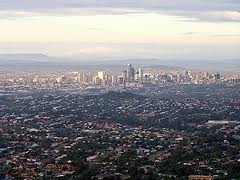
Brisbane from Mt Cootha looking east

NOTES ON THE BCC ARCHITECTS FORUM 18 July 2002
This text was written as a response to a ‘think tank’ evening for architects arranged by the Brisbane City Council in 2002 to discuss subtropical design issues and potentials for our city. Brisbane lies 500 kilometres south of the Tropic of Capricorn that crosses the east coast of Australia at Rockhampton. The city has a population of about one million people. It is located on the Brisbane River, with the CBD about twenty kilometres from Moreton Bay and approximately eighty kilometres from the Gold Coast. Brisbane enjoys a pleasant subtropical environment.


Poster-like invitations were sent out to members of Brisbane’s architectural profession to encourage attendance at this design Forum. While this meeting occurred over ten years ago, the response remains of interest today because the issues have not gone away. Indeed, a review of the response offers a good opportunity for the impact of this evening on our city to be gauged. The document was forwarded to the Council officers who organised the evening.


 Dear Sirs,

I must first apologise for my advice to Council that I did not receive the invitation to the ‘Think Tank’ of 18th July. I did indeed receive it, but it was my response to the publication that made me believe that my initial advice was correct. It was after Council’s reminder call that I remembered, with some quiet embarrassment, opening the envelope, looking at the contents and flicking them aside as more colourful, professionally produced propaganda.

The PR marketing game has become so adroit at producing clever, attractive documents that one has become immune to their impact. Within the architectural profession, this self-promotion has become an art form that indulges in the power of the image that then in turn becomes the driving force for new works. It is this superficial attractiveness that I have hoped to shield myself against by ignoring the clever glossy photographs, all carefully framed, filtered, flipped and fashioned into the smart sheen of oversized sheets smothered with extraordinary, unusual, graphic distortions. Our world is filling with this insincere exaggeration that trivialises meaning and disguises falsehoods. What architect has not seen the transformation of ordinary, (and less than ordinary), works into the extraordinary by the smart shot that is admired for its dazzling amazement rather than its representation?

So it was that I flicked the ‘new’ publication aside, even after noting the ‘new subtropical design’ heading that generated only more cynicism. The BCC has so aggressively promoted our place as the ‘Most Livable City’ - (should it not be the less American ‘liveable’?) - in repeated and exaggerated euphemism, shine and colour that I put this promotional paper aside as more of the same twaddle.

Need I say more in critique of this document? It does help me articulate my response to the Forum: if we hope to have an impact on design in this city, then we must remove ourselves from the indulgent, special, professional images and engage the humble and the ordinary. We must bridge the doubt of disbelief in the importance of design and the reading of our profession as arrogant, expensive, exclusive ‘artists’. In this way we might reach the extraordinary that is never achieved by hyperbole, distortion or concerted, conceited effort, no matter how pretty the outcomes might be or how effusive the profession is of its own qualities.

We first of all need to understand ‘design’ as something that is not special or unique, or even ‘new’, in the way that the publication is so clumsily titled. If the city is to change, we must engage everyone with the understanding that every man is a special sort of artist, not that every artist is a special sort of man, as Ananda Coomaraswamy explained in the context of understanding traditional art. Further, we must work not with the idea that design is unique or constantly ‘original’ in the sense of an ever ‘new’, unique, aesthetic self-expression, but that design has to do with origins and facts, remembering that nothing can be beautiful if it does not work. More complexity is involved here, but the concept will still make sense even if the ‘origins’ are perceived only as the facts about building in the subtropics.

So first of all, the BCC, if it is indeed serious about this proposal, should look at promoting the facts and support the promotion of research, debate - (yes, even critiques that might raise negative matters) - and a broad, easy understanding of issues with this ‘subtropical’ strategy in mind. Just who the audience is should be made very clear – it should be ‘everyman’. To consider this an exclusive, elitist issue for the profession to pass on to the ‘remainder’ of the population will only alienate folk who already think architects too self-interested, flippant and indulgent with others’ money and time.

It is also essential to start this work with another understanding beyond that suggested in the gloss that speaks of Brisbane as ‘a dynamic city, and a great place to live and work’ – ‘livable’ comes to mind – all when there remain serious unresolved issues across a variety of civic and urban matters. There seems to be a sense of wanting to believe this textual embroidery – as if by saying it, it will become true. In this sense the publication touches on the political statement that overemphasises the positive beyond reality in order to smother it. Killing perceptions with kisses comes to mind.

I recall typing some notes after the first Forum and earlier recording thoughts on Brisbane after thinking about irrational matters concerning cyclists. I have attached these documents for your information and in order to explain and expand my position – see Town Planning Concerns  http://voussoirs.blogspot.com.au/2012/08/town-planning-concerns.html  and  http://voussoirs.blogspot.com.au/2012/08/most-livable-citiy.html  Brisbane does have problems, and these go beyond the matter of Tim Quinn’s, (Tim Quinn was Lord Mayor at the time), preferred footpath awnings. On pondering this tale, I immediately thought of the new Brisbane Powerhouse Centre where the promising covered way approach leads to a large, open, uncovered area that leaves the entry location to be guessed at, making it seem like a distant mouse hole that exposes all visitors to the challenge of the elements. There are no efforts for any continuation of protection in this BCC project beyond the false beginning that finally leaves one alienated in the void, to fend for oneself.

I really did not pity Tim Quinn, because I did wonder if he has ever used the BCC buses rather than his private car. On buses, the new computer information that appears on the curved post near the local bus stop is interesting. Buses that are scheduled sometimes never appear – they just fade off the list like old soldiers. Other programmed items declare arrival times that are constantly modified as the bus gets later and later, only to eventually arrive ‘early’ when compared to the revised time. One wonders if the whole is not merely a grand undertaking for the enjoyment of the supervisor. At least it gives some amusing entertainment during the frustrating delays.

Once on the bus, there is the problem of getting fresh air. Windows are often jammed closed, or have broken or no catches, giving the same outcome. The overhead air vents are frequently unable to be adjusted for redirection or, like the windows, are stuck closed. The newer buses  have fixed glass with air conditioning that is under the control of the drivers who often express their preference for a stifling, stuffy environment by leaving this ventilation off until one is nearly suffocated or until the driver has been alerted to action by a loud prompt or a rude complaint.

If one can survive this trauma, there is always the filth of the bus to annoy. The graffiti decorated with chewing gum; the food scraps left in spite of the ‘no food’ sign; and the general grime all test the satisfaction of the ride and its convenience. After sunset, the challenge is to find a seat under a light that works if one wants to take pleasure in the opportunity to read during the journey. It is often so dull on buses that reading becomes a chore rather than a delight, all because the tubes are not replaced immediately on failure or regularly at the end of their efficient lives.

I always find it a sheer joy to step off a bus into the open, fresh environment – even if it is pouring rain – such are the problems of BCC transport. The lack of awnings fades into irrelevance. One can only be pleased about the new efficiency of the busway, not because of its urban characteristics, (these only make one shudder), but because one is able to get to one’s destination by spending less time in the surroundings of these neglected vehicles.

I recall during the early stages of Expo 88 when Brisbane transport lost control of its services, I was once given a questionnaire on a bus asking for a response to several standard questions and for general comments. My comments spoke of the late bus, the rubbish at my feet and the lights above me being out. Some weeks later I was again asked for comment. Again, I found myself in exactly the same circumstances, as I still do today.

I find it silly to talk of this great, liveable city and of the need for awnings when simple things are ignored. And why cry for art works to decorate our public places when the demolished, core Boardwalk entry sculpture, (to the  riverside boardwalk along the Kangaroo Point cliffs), remains dumped, scrapped against a wall in full public display all without any discussion and in spite of complaint? You will understand my position from the attached texts (see Town Planning Concerns  http://voussoirs.blogspot.com.au/2012/08/town-planning-concerns.html): if we are serious, we should take on the little tasks and get these right so that eventually they might give us a growing conglomerate impact of substantial improvement – real beauty. So often reaching for grand gestures in an effort to give us quick, grandiose changes only becomes frustratingly counterproductive, or gives rise to outcomes that are too self-consciously shallow, even though they might generate a lot of noise and gain attention.

I agree with the idea outlined by the BCC, but must emphasise the importance of carefully and properly managing the effort to give real outcomes rather than ones that can look good in annual reports and CVs. Clean, efficient buses will be a good start, as will be the little improvements in urban and suburban spaces that can eventually give us a city to be proud of. Political overemphasis and indulgent propaganda will only leave folk dismayed and despondent, as the present ‘demolish rather than maintain’ strategy of the BCC does. The alarming policy is that if something is vandalised, rather than repairing it, it is removed.

So with this understanding, the subtropical design thrust needs: affiliation with other bodies; an open, public face; an easy, inviting accessibility; a true grasp on reality; a real grasp of facts; a reputation for endurance and quality; an avoidance of pretty images and meaningless texts; and the stamina and rigour to allow open debate.

How to start? The late Jim Woolley of QUT designed a computer programme that he saw as a design aid. Make this clever, attractive and useful programme available to everyone in a public place – the first Centre for Subtropical Design. Why not a shop front in the mall? It would be an appropriate beginning and a wonderful outcome in memory of Jim who was passionate about design for climate in all its true subtlety and potential richness. Call it the Jim Woolley Centre for Subtropical Design? Do not call it the Jim Soorley Centre, (Jim Soorley was once Lord Mayor of Brisbane), etc., not because it is an unworthy initiative but because it is too important to be touched by politics, even if it is the politicians who are driving it. The politicians could gain more credence if they keep remote while maintaining total commitment.

In the same way as we look up to those with accents from another land, we have become too used to having the ‘serious’ Centres for Tropical /Subtropical Design located in London and other unlikely places – like the surfing school, (yes, PhDs and all!), that is located in Portsmouth, England! We should grasp the opportunity that the BCC has creatively and generously opened and make this a centre for worldwide reference; a real core of strength and quality, with a reputation to match. This will involve the Internet; publishing; the promotion of ideas and publications; a reference library (or easy access to others); research. It will involve a continuing commitment and proper funding. It will need a way of reaching out with significant results that hold status, in the same way that the universities offer degrees – (I do not know how yet). It does not require a political input, just a committed support to open opportunity and quality outcomes.

It must touch everything in the BCC. Planning must be involved – serious planning that can and will say no rather than sit down and negotiate any possibility into reality. We do not need the ‘1946’ strategy - (the city tries to preserve pre-1946 buildings to maintain character) - that allows 99% of a place to be removed in the name of keeping heritage; or for homes to disappear in favour of half-million-dollar worker’s cottage look-alikes, complete with all the original problems of proximity in areas that knew no such cottage construction. We need to keep the Brisbane that is good, not for mere nostalgia, but with creative wisdom.

And we do not want spin. The great danger of such glossy BCC publications is that they become the source of the words that prove the stupid, irresponsible project complies with everything the BCC wants, as if the saying of the words creates the reality as a phantom that never can or will be. Alternatively the words become fodder for the legal mouth to chew over and spit out just to smother any rejection. It is like the case of the smartly coloured, cheaply sheeted ‘boxes’ with a skillion roof and a few slats, (of course all of the same height of the 1920 neighbours), that become the ‘lightweight materials’ and ‘screens’ that supposedly ‘match’ these older giants of traditional housing made from ‘lightweight materials’ and also have ‘screens’. Many other more subtle matters are involved. These circumstances need to be addressed if Brisbane is to become anything beyond a rehashed, fashionable, developer’s profitable mess. Squeezing four, three-bedroom homes on to a 35 perch block in a sprawling, subtropical, older suburb comes close to being a nonsense – even if it can apparently be ‘justified’ with words and ‘rational’ logic.

So it is that a real effort is required ‘across the board’ if a genuine result is sought. If this Subtropical Design Forum is only a political promotional effort, then keep going with the same. It looks very good, sufficiently impressive to alter some perceptions. If not just a political game, then the real work has yet to be done. But congratulations on the start. We need more debate.

And as I re-read this text, I think: if the city is to change we need to clearly state what is wrong with the city rather than exaggerate what we think is or could be right with it. Let us begin even this analysis, for only good can come from it. So it is that we should drop the ‘livable’, even if we spell it as ‘liveable’!

Thank you for the invitation.
I hope you are interested in further developing ideas and issues touched upon in this communication.

Regards,

Spence Jamieson

 
typical inner Brisbane suburb 

NOTE:
After pondering on how a Centre for Subtropical Design might gain international stature like a university (apart from being locally popular):
It could gain a reputation for consistent, quality research.
It could publish this research and other material to do with the subject.
Perhaps there could be an annual research grant that has to be applied for?
This would require a substantial sum to be invested or a regular budgeting for this grant – or a sponsor.
Perhaps a ‘subtropical’ house could be built as an ‘exhibition’ home? – every two years?
Regular design competitions (regional/international) with substantial prize money – and with the plans to be sold or home built?
Publish the competition results every year?
There could be awards for inventions to do with subtropical living?
Perhaps the publication could be an amalgam of competition entries, research, references and inventions?
One essential factor in all of this is the long-term funding of this enterprise and its management and implementation. All of this should show an energy and creativity that could set the tone for the whole identity of the centre.
The centre should be aligned with as many prestigious centres as possible, but it should always retain its own core identity. It should not become part of a tertiary institution no matter how alluring this might be. These tertiary centres should, in part, themselves become a section of the Centre for Subtropical Design.
Quality and commitment are the core issues here.

 SJ

 circa 1920 Brisbane residence

Alas, no. The BCC was not interested in doing anything. The communication was ignored. No response was ever received. Nothing happened from what seemed to be a good start. Nothing – not one thing! It turned out to be just a waste of time – a ‘talk-fest.’ Ten years later the city is still struggling on, managing developments in the same ad hoc, random manner, while developers are becoming more sophisticated, clever and cunning. What hope is there when a Council advises that it still prefers to negotiate outcomes rather than insist on the strict implementation of a rigorous Town Plan? Sadly, the current Town Plan is written to describe and define only ‘performance criteria,’ turning development into what looks like a puny word game.

Wednesday, 8 August 2012

BORO - THE ART OF MENDING


While today’s architects struggle to create self-conscious wonders with manipulations and morphing, manufacturing deliberate contortions for an indulgent difference under the guise of self-expression, in other times harsh necessity created apparel that leaves our world exuberantly acknowledging its’ special beauty. 'Boro' means 'rags' in Japanese, and it's as simple as that; the word has no regional, aesthetic, age/era, color, content, method, or origin-related inferences. Any cloth can become a boro (noun) or boro boro (adjective) in hours if you, for example, used the wrong washing cycle. (see  megweaves.blogspot.com/.../boro-for-want-of-blot-post-title-part-1.h...) Sadly, in our era, fashion works extremely hard to recreate a ‘worn’ look that adds dollar-value and, apparently, desirability to garments hoping to appear similarly ‘used’ like those fabrics of older times worn in various, usually rural, pursuits. For example, new, quality ‘cowboy’ jeans are ‘harassed’ or ‘stressed’ - ground, cut, abraded, bleached, stained, scrubbed, and abused in any way conceivable - all for what is seen as a chic appearance.


It says much about our times that we can see the beauty in boro pieces from old, northern Japan, and the results of other types of wear-and-tear from hard work at other periods and places, but seek only to reproduce this the ‘easy’ - or is it the ‘lazy’? - way, while our worn clothes are discarded as undesirable trash. Thought is rarely given to mending these discards, or seeing them as something desirable. They are treated with the disdain that socks with holes in are given. Once holes in socks were carefully repaired with criss-cross darning threads as they were stretched over an open drinking glass or mug, but now holes, and their darning infills, are seen as social misfits. Yet it is the repeated repair-work on the boro pieces that we cannot praise enough. We have appropriated appearances for our own slothful, exhibitionist culture that we consider, at the very best, to be expressionist, telling all about ME and MY difference: the singular assertion of my unique being in the universe. The great sadness is that the real wonder - the inspiration - originally arose from the outcome of true struggle and graft: honest work if you like. There is nothing pretentious or self-seeking here, but this is never a part of the equation of our admiration, or of our pity.


The humble boro cloth offers a view of how beauty can grow from necessity. How the required patching and mending of frugal times has given the world some astonishing items as a rich layering of ‘innocent,’ collaged pieces fixed with a patterning of stitches, that have come together simply because it has had to happen this way. There was no opportunity to do otherwise; no opportunity to indulge in fashion or style, beauty or ‘self-expression.’ Replacing the clothing was out of the question - unaffordable. Function truly has generated the form, so that the form could continue to function. It really was a ‘patch-up’ job - with rags. Louis Sullivan’s form and function of the rose and of a leaf comes to mind: the form of the leaf/rose is the function of the leaf/rose and vice versa. Look closely at a leaf/rose and ponder this perception. The understanding is just the same as looking at a piece of boro fabric.


There is a lesson here that we might choose to borrow (apologies for the pun) - that beauty is not distracting style, fashion or entertainment: that true beauty can come from the struggle with the real world - from effort - rather than from any guessing and grabbing at self-important dreams that ignore facts or seek to overcome their assertiveness. Art is not an indolent self-expression that suppresses life’s everyday hassles by surprise.


There is a sense of things really organic in the boro texttiles - an integrity that does not seek to declare its own importance. It is humble, unassuming, self-effacing, modest: meek. The words ‘Blessed are the meek, . .’  come to mind, and are given an affirming context. The work seeks nothing for itself. We have chosen to frame it, to exhibit it; to put it up on a pedestal as art, as something special and hence expensive - collectable - to be removed from a living experience for pretentious presentation or promotional pomp. Yet it, just like the Japanese tea cup with its’ origins in Korea’s peasant pots, arose from a time that knew art as an ordinary, everyday event that grew from sincerity, love and care: from a genuine concern rooted in the commonplace. Here, as Ananda Coomaraswamy spoke of it, an artist was not a special kind of man (or woman), rather every man (and woman) was a special kind of artist. It is this quality that has shaped the boro pieces. This is an understanding that we know little of today. Our art is different, unique because it expresses what is seen as the artists’ exceptional individuality - a quirky personality.


 Architecture knows this very well. It has heroes that explain “I just wanted to . . . . ,” as if the world depended on this being so. The only function a form now appears to relate to is just how different it can become within the limits of possibility and endurance - that of the client and the public. "Try two folds in the paper model wall instead of three" is the essence of one architect’s concerns when searching for form: “No, it doesn’t look unusual enough yet” - (see DVD American Masters Sketches of Frank Gehry by his friend Sydney Pollack). In ‘architectural’ publications, cameras are used to heighten these distorted differences with ‘photo-shopped’ low angles and wide angles, and tricky artificial lighting effects. That there might be another understanding is poo-pooed: all that ‘form follows function’ rubbish is old hat; the past. “We are moving forward” seems to be the gist of the architects’ refrain that even politicians are bleating out as an excuse for their foibles. One has to ask: where from; where to; in which direction; and why? It is rarely, if ever, considered that one’s individual differences might be aberrations to be avoided rather than articulated as so-called art with some significance.


One should not only look at the art of another era, but must also see it, feel it, and understand it, in order to truly come to sense its original role, and that of the artist, even though this person is usually unknown. Art that leaves us more than ‘gobsmacked’ today has been made by man/woman with a determined intent, with a certain defined ambition. It is not random, personal desire that has made these things, although things personal and obtuse are involved. The circumstance held a necessity equal to that seen in boro pieces, but different. The individual was not important. This was no mere self-expression. Indeed, things to do with self were seen as abnormalities. It is something we need to come to understand. Work had to do with aspirations that reverberated throughout culture, country and the cosmos. There was a rigorous intellectual base for this work that has given us things that still stand with a certain silent authority, stunning us with their depth, clarity and sincerity.


 Yet we choose to see these boro items as artworks in the way that we choose to understand and categorise our art - as fabulously different, unique distortions, expressions of self: something to be put into a museum or art gallery to be gawked at as distinctive, decorative, unique items labelled DO NOT TOUCH, not because they are especially beautiful, but because they have 'dollar' value. The great irony of boro and other wear-and-tear delights is that it is touch that has given them the appearance that we know and admire today, an aspect that has arisen from a disinterested and nonchalant response to needs. We need to discover how an attention to living, to work, can create great art as a matter of necessity, rather than choosing to see art as an expensive and self-conscious divergent indulgence of the specialist for the delight of the art market and other consumers, while seeking names in neon and numbers in new dollars: ME & MINE.


We must discover that the individual is not the core, but rather the odd one out; and that art is never the searching for the unique thing; that creativity has to do with something we call spirit and all that this entails, even though it is a very unfashionable concept today. The persuasive proposition, ‘the opium of the masses,’ comes to mind to defend this negative position, when maybe our current perceptions are better described in this manner. Still, in spite of all of this debate, the astonishing substance of the most humble of artefacts leaves us amazed. We need a better response than working hard to copy this ‘character clothing’ the ‘easy-peasy’ way. It is like mass producing an assemblage of hundreds of small, pink plastic copies of the Kamakura buddha, and believing that its’ essence as art is embalmed in this 'striking' stance that is only a 'my personal interpretation.' Coild it be misguided?

Art is . . . art is something beyond explanation and definition. It is something that we know by feel, but turning this around into making art the expression of one’s own feeling is illogical, demeaning in every sense, as in the belittling of quality and the ‘deconstruction’ of its’ substance. The rational logic of our quantitative times may see some sense in this clever interpretative verbal reversal, but logic fails to touch poetic quality: it destroys it with its’ cold, bold certainty.

Everyone wants to own at least a little piece of boro, as if to get close to its’ being - perhaps as a talisman. Let us all seek to carry just a little portion of the humility, the humbleness, that made these rag pieces so beautiful and hope that this might grow into an understanding and something more substantial with time, and turn us away from our rude arrogance that allows us to see ourselves as better than all pasts, all other cultures and eras. “Looking backwards” does not mean that others were backwards, just as “moving forward” does not identify any positive change, potentially better difference or simple improvement. Matters are much more complex than clichés.

I wonder if a broken iPod will be collected as a desirable trinket by others in future times? Will these folk make copies of broken hardware to decorate their environment? It may be that these might be the only old things left by us, as we have become a culture that has no need of repair with the ever-changing new gadget, fashionable object, or invention that makes the previous ones obsolete, trash within months. Already quilt makers are reproducing boro pieces in their new works. One is tempted to cry out, "Oh, forgive them, for they know not what they do," because it looks like a blind, almost desperate fumbling for meaning that we are all seeking and always hoping to discover.

We forget that an answer is truly no answer. The poet Constantine Cavafy said it best in his poem, Ithaca: arrive ‘not expecting that Ithaca will offer you riches./ Ithaca has given you the beautiful voyage.’
Whole poem reads:

Ithaca

When you start on your journey to Ithaca,
then pray that the road is long,
full of adventure, full of knowledge.
Do not fear the Lestrygonians
and the Cyclopes and the angry Poseidon.
You will never meet such as these on your path,
if your thoughts remain lofty, if a fine emotion
touches your body and your spirit.
You will never meet the Lestrygonians,
the Cyclopes and the fierce Poseidon,
if you do not carry them within your soul,
if your soul does not raise them up before you.

Then pray that the road is long.
That the summer mornings are many,
that you will enter ports seen for the first time
with such pleasure, with such joy!
Stop at Phoenician markets,
and purchase fine merchandise,
mother-of-pearl and corals, amber and ebony,
and pleasurable perfumes of all kinds,
buy as many pleasurable perfumes as you can;
visit hosts of Egyptian cities,
to learn and learn from those who have knowledge.

Always keep Ithaca fixed in your mind.
to arrive there is your ultimate goal.
But do not hurry the voyage at all.
It is better to let it last for long years;
and even to anchor at the isle when you are old,
rich with all that you have gained on the way,
not expecting that Ithaca will offer you riches.

Ithaca has given you the beautiful voyage.
Without her you would never have taken the road.
But she has nothing more to give you.

And if you find her poor, Ithaca has not defrauded you.
With the great wisdom you have gained, with so much experience,
you must surely have understood by then what Ithaca means.
 (translated by Rae Dalven)
www.awakenthemagic.com/inspire/ithaka.php

 This was said differently in other contexts: ‘Seek and ye shall find;’ and again: ‘If you find the Buddha on the way, kill him.’ Perhaps the boro pieces can be seen as the discovery of a richness on the way, a port ‘seen for the first time with such pleasure, such joy!

The article from Quiltmania, The Quilt Magazine, No. 89, May/June 2012:


NOTE
26 MARCH 2019

Saturday, 28 July 2012

THE DILEMMA OF PRACTICE


Concerning Formations: the plasticity of practice
see  http://architectureau.com/articles/formations-the-plasticity-of-practice/

This article on practice in architectureau was copied and handed out to become the subject of a conversation over lunch. The promise made to colleagues to find ‘three words’ to clarify this messy and puzzling blurb has turned out to be ambitious. A quick summary has been made here and a commentary has been appended, as the article provokes thought and stimulates a response to its haughty, linguistic games.

The basic idea is that the practice of architecture is being changed by others, and other situations and circumstances outside of architecture; that practice itself has to change into an open, more flexible, collaborative structure, using its broad expertise more generally, generically, rather than remaining as isolated individual, design specialists creating ‘iconic’ buildings for glossy publications and awards. The proposition is that the traditional image of the architect is being perpetuated, perhaps with perceptions being limited, by habit, Acts, boards, Institutes, and insurance and other companies, while the world around it is changing dramatically and quickly - Google, Facebook, etc., making it appear obsolete - an anachronism. If one were forced to provide three words for this synopsis, they would be TRADITIONAL PRACTICE REFORMS.

It is what we all know. Questions about what and who is an architect have already been asked - see http://voussoirs.blogspot.com.au/2012/05/who-or-what-is-architect.html  The real problem is getting others to understand the situation. Articles like Formations: are indulgent and self-important. They help fill up CVs. The question is: what has to happen for real change? Any self-satisfied delight in a complex array of confusing words is not useful. Articles like the plasticity of practice only enhance the separation of architects from others in the community, isolating by reinforcing the cliché. Texts like this are self-defeating. It is the professional academic world communicating with itself.


 We need to convince insurance companies, corporations and governments, and the like, that architects have a unique expertise that can offer ideas and shape outcomes that can be important in any situation. Indeed, we have to persuade the ‘man in the street’ that architects have these significant skills, because basically companies, etc. are only a collection of such folk. To highlight ‘capabilities’ like Brown’s, as the article notes, we need to earn respect, not ridicule, from those in authority who manipulate power. This can be achieved with recognisable, responsible outcomes that erase the memories of the truism that defines and declares an architect’s arrogant disregard for expectations, results and their implications: c.f. ‘I thought I’d like to do a concrete house this time as I haven’t done one before’! Or: ‘I had a crumpled paper vision for this building.’

The situation brings to mind the student studying koalas. He enthusiastically sought and obtained the support of a well-known and popular singer/song writer to create what he spoke of as the necessity for government to act on the protection of koala habitat. This student had a grand plan to empower the public and embarrass the government, to make sure that this outcome could be achieved. The argument was persuasive, supremely logical and rational. The only thing he lacked was real power itself; and power was not moved. Nothing came of his plan - it just faded away, jaded, as others kept doing whatever they wanted, paying no attention to him. Power has the ability to ignore, discard, dismiss and forget, regardless of the evidence.

One can scream and yell, but power is required - one’s own power, or the recognition of the circumstance along with an appropriate co-operative response from another authority. How to get this power? How to get this power to take notice? How to make this power discover the importance of an architect’s involvement in a myriad of circumstances? How to get others to think: we need to get the architect in, instead of: we need to sack him/sue him; I could have done better than this expensive, foolish dilettante? These are the concerns that need consideration, not just the smartly clever, academic redefinition/rendition of ‘architecture’ or ‘practice’ and the timeless call for others to be ‘educated’ to admire unique talent and difference.

We know that architects can assist in many situations outside of building design, but how do we overcome the cliché that sees architects as costing one time and money - wasting it - while still demanding big fees for fantastically impractical, fanciful visions? How do we overcome the perception that architects design for themselves and create problems with their elitist visions; that architects should be shunned to steer clear of problems; that one should never have an architectural competition, as there are always problems with outcomes and costs: the ‘opera house’ problem? We all know it: one has to keep away from architects or have them carefully managed by some responsible person if they have to be used. Sadly the cliché is rooted in and feeds on ever-recurring facts.

Articles like this ‘plastic blurb’ text do not help. They reinforce the idea of the exclusive, snobby, elitist side of the profession. The use of ‘academic’ language only reinforces every prejudice that is currently held. We must start using ordinary language if anyone is going to start listening, just as we must start generating ordinary outcomes that are extraordinary if we seek any recognition and understanding of our potential role - the role of our potential - from others. Our continued delight with extreme difference will only aggravate matters. Architects continue to drool over and promote the unique, ‘creative’ original - the bespoke concept - as their ideal.


 Then there is the ‘local’ problem: this is Australia, with the ad hoc, DIY, ‘wouldn’t you have thought’ culture of disregard for things ‘learned’ and subtle; where the irony is that success means that one is sidelined rather than seen as holding a useful skill/expertise to be harnessed. Instead, achievement screams out ‘avoid’ and sets the stage for trampling. Potential clients are encouraged to seek talent elsewhere - interstate; overseas. Things are always better otherwise and in other places: (see the Central Park development in Sydney and its promotion; and the new School of Architecture at Bond University). Only actions and outcomes will change these things.

What is important is that the profession has to start supporting itself. The idea of the unique genius - that any other architect always could/would have done better and will challenge for all future work on this basis - is embedded in our own vision of ourselves: well, it seems, in the majority of minds. The stories are astonishing, as are the brazen lengths that this throat cutting will go to. It is rare that an architect is promoted or praised by another. The norm is the undermining of one another; and the demolition of all other ideas, and fees - cost-cutting - with seeming conceit and delight: of course, ‘colleagues’ apart, as awards show. This is the country of ‘mates’ - ‘g-day mate’!

If the profession cannot show respect for others inside it, what chance is there of others outside it holding any respect for it? One has to ponder what the cathedrals might have looked like with this nasty, competitive streak! Still, it helps us understand why we have the outcomes we are currently living with today; and why the profession is seen as it is. It is not merely a matter of what ‘practice’ has become or might become to those ‘academically’ disposed. We need to overcome the ‘smarty pants’ hero image with ‘good work,’ as Fritz Schumacher knew it and spoke of it in a book with this title, and in other writings too, like Small is Beautiful.

There is a problem if we can’t or are unwilling to help ourselves. We need to be aware that no one else will do it for us. We have talent, but it needs to be shown to be more than useful in practice. Skill needs to be exhibited in real practical terms to be understood and appreciated by ‘ordinary’ people. Then we might start being seen as a necessity instead of an indulgent frivolity and a waste of money. We need the education, not the others. We need to change so that they can change too. We should stop blaming everybody and everything else, for we create the vision of architects, architecture and practice that we choose to perpetuate by our own actions or inactions - maybe both.